What Gets Remembered. What Gets Forgotten.
Quick Summary - Let's explore how brands truly become part of memory - not by shouting louder, but by whispering deeper. Drawing from psychology, neuroscience, and real brand examples, it reveals that memory favors emotional moments, meaningful surprises, and gentle, consistent presence over flashy volume. In the end, it’s not visibility that makes brands endure - it’s resonance.
NEXT 4
4 min read
What Gets Remembered. What Gets Forgotten.
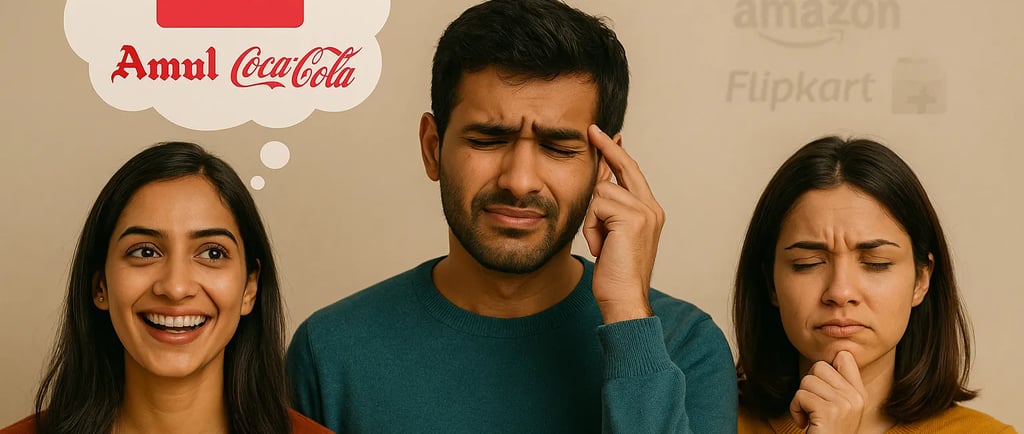
Not everything we see becomes memory.
Not every brand we meet becomes part of our story.
The mind, as it turns out, isn’t a loyal archivist.
It’s more like a brilliantly forgetful storyteller - cutting, exaggerating, and discarding as it pleases.
In a marketplace where brands shout louder, flashier, faster, the winners aren’t those who burn the brightest.
They’re the ones who linger the longest - quietly, like a song you can’t name but can hum by heart.
Psychologist Daniel Kahneman framed it well, when he said - We don’t remember experiences start to finish.
We remember their peak and their end.
A soaring joy.
A sharp disappointment.
A farewell that felt just right.
Brands are no different.
They’re built in the invisible spaces where emotion meets memory.
Real brand-building isn’t about shouting louder.
It’s about whispering deeper.
This is a journey into how memories are made, how they fade, and why, sometimes, the smallest dots leave the deepest impressions.
The Mind: Less Hard Drive, More Improvisational Theater
The human mind isn’t a passive recorder.
It’s an active editor - stitching, trimming, reframing.
According to Selective Attention theory, we absorb just a fraction of what happens around us.
The rest either blurs into background noise or gets reshaped by internal meaning-making.
Which is why two people can experience the same brand, event, or ad - and walk away with entirely different memories.
Memory, it seems, isn’t what happened. It’s what happened to us.
The Peak-End Rule: Where Experience Really Lives
In his research, Daniel Kahneman discovered something interesting:
We don’t evaluate experiences by averaging every moment.
We summarize them based on two things:
The most intense point (positive or negative)
The ending
Everything else? Blurred. Forgotten. Compressed into background hum.
This is why a brilliant meal can be soured by a rude waiter, or an ordinary holiday remembered forever because of one perfect sunset.
Brands live inside this distortion.
Think of a stay at The Taj - a handwritten note often matters more than high-tech rooms.
Think of Cadbury Dairy Milk - not selling chocolate, but joy, celebration, connection.
In memory, it’s not the duration of excellence that counts - it’s the intensity at the right curve.
As marketers, there’s comfort in knowing - we don't have to be unforgettable every second.
Just at the right moments, preferably when hearts are open.
Emotions: Memory’s Secret Ingredient
If memory had a kitchen, emotion would be its salt.
Emotion-Encoded Memory suggests that heightened emotional states - joy, surprise, awe - lock experiences deeper into our neural circuits.
Amul's ads don't just inform - they chuckle, nudge, and nest into nostalgia.
Nike doesn't sell shoes. It sells grit. Dreams. That silent 6 a.m. run when nobody’s watching.
It’s not product specs that stay.
It’s what the brand made us feel.
And that feeling, stitched quietly into our story, becomes memory.
Repetition: Familiarity Without Fatigue
Behavioral scientist Robert Zajonc introduced the Mere Exposure Effect - the idea that familiarity breeds liking. Repeated exposure makes things feel safer, more trustworthy, more "ours."
But there’s a fine line - between nurturing recognition and becoming elevator music.
Intel’s four-note sonic logo.
McDonald’s “I’m Lovin’ It” jingle.
Familiar, but never nagging.
Present, but never shouting.
The best mnemonic devices in human history - myths, songs, rituals - are familiar repetitions dressed in slight variations.
Brands that whisper consistently - symbols, sounds, emotions - borrow the same timeless blueprint.
Like an old melody you don't realize you still hum.
The Illusion of Volume
It’s tempting to believe that more budget = more memory.
That if we just flood every platform, every eyeball, the mind will surrender.
But minds aren't gates you batter down.
They’re gardens you plant.
Byron Sharp reminds us - brands don’t need emotional resonance to be remembered,
just consistent visibility and distinctiveness.
Look around - many brands you remember aren’t the most creative, but the most consistent.
Same visuals. Same sound. Same stubborn repetition.
And yet, they sit quietly in memory, like wallpaper that became part of the wall.
Studies show that expensive, high-gloss ads placed in prime moments are often forgotten within weeks.
While grassroots movements, emotional stories, or humble, repeated rituals stay alive for years.
The loudest marketing often fades the fastest.
The gentlest shifts - the dot, the whisper - last.
The Dot That Echoes
So, what gets remembered?
A moment that stirred.
An ending that felt like a beginning.
An ordinary interaction made extraordinary by meaning.
Brands, like memories, aren’t built by force.
They’re built by feeling.
The mind doesn’t reflect the world.
It reframes it - coloring what it keeps, quietly filing away what matters.
It wouldn’t be out of place to say that somewhere between the peaks and the endings, somewhere between the story told and the story remembered, lie the dots - small, vibrating, alive - that turn a passing glance into a lasting place.
Not every whisper gets heard.
But the ones that do, they stay.
And yet, if memory is built not by force, but by feeling - how does one quietly plant it?
Planting the Memory: Lessons Often Forgotten
Memory doesn't reward the loudest, nor the ones who demand it most.
It favors brands that understand a few quieter, less obvious truths:
Memory welcomes the familiar - but remembers the meaningful surprise.
Novelty triggers dopamine and deepens memory encoding, as neuroscientist Wendy Suzuki reveals.
But novelty without emotional anchors becomes a firework: brilliant, but fleeting.
The mind remembers what surprised it - and even more, what surprised and mattered.Peak experiences aren’t about grandeur. They’re about resonance.
The mind doesn't crave massive spectacles.
It clings to moments that feel personally significant - a line scribbled on a receipt, a smell from childhood, a silent kindness.Most brands are forgotten not because they were bad, but because they weren’t retrieved.
Memory is a library, not a trophy case.
Winning isn’t storing a perfect memory - it’s being easy to find when it matters.You don’t control memory. You co-create it.
Brands become memories the way myths do - slowly, collectively, through retold moments and rituals, not through perfect monologues.Patience, not perfection, wins.
Most exposures will fade.
Most messages will drift.
But the ones that are repeated with care, with consistency, with humanity - they stay.
Memory is not a fortress to storm.
It’s a river you learn to sail - gently, attentively, without guarantees.
And the ones who sail it best, are those who whisper, and wait.
Building Brands The Mind Will Keep
Because in the end, branding isn’t about being seen.
It’s about being kept.
Connect
Explore
sumeet.pahwa@gmail.com
© 2025. 2026 Sumeet Pahwa. All rights reserved